10 Nov 2026
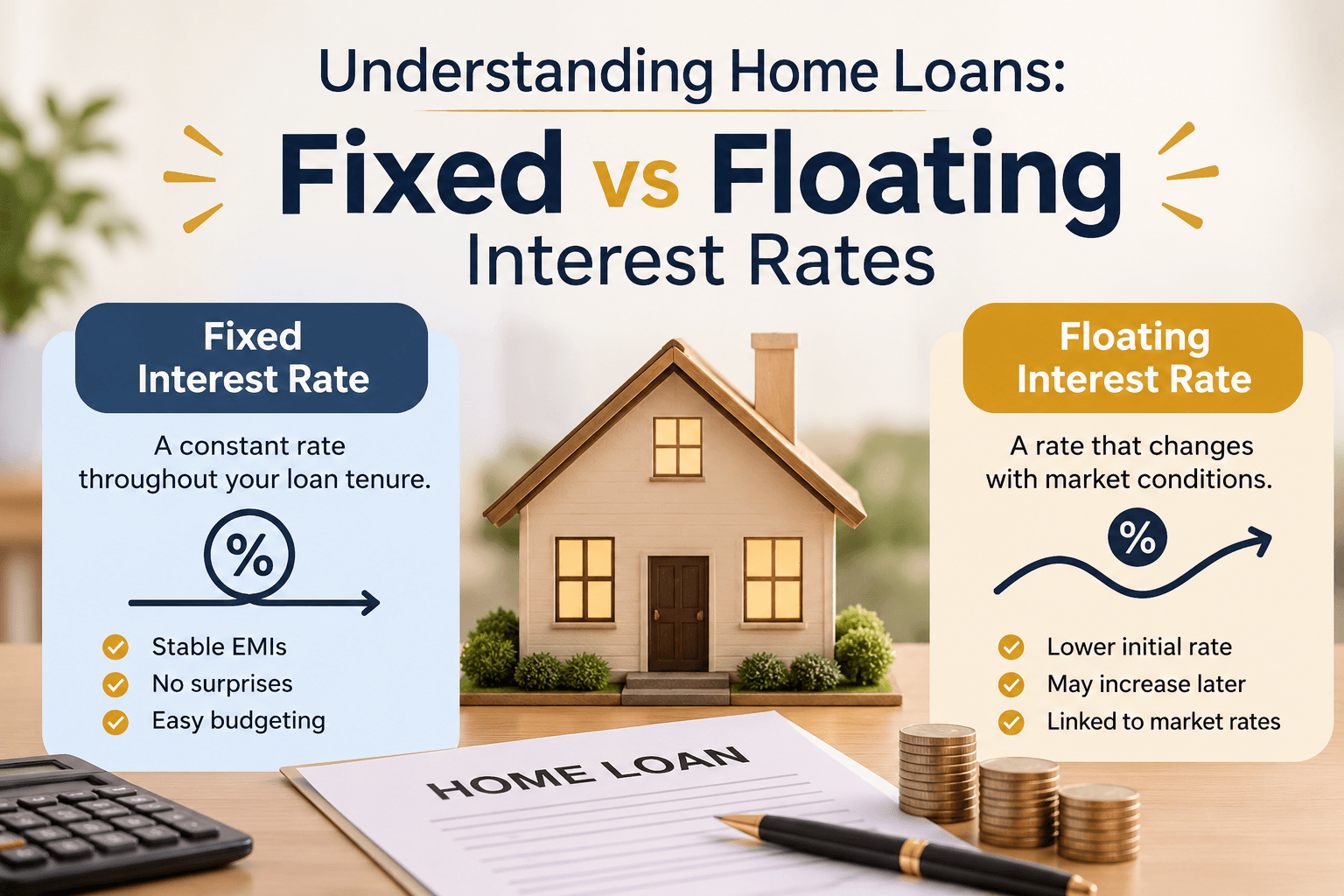
When buying a home, understanding the difference between fixed and floating interest rates is essential for making a smart financial decision. A Fixed Interest Rate remains unchanged for the agreed fixed-rate period, ensuring predictable monthly EMIs (Equated Monthly Instalments) and making it easier to plan your household budget. A Floating Interest Rate changes according to market conditions and the lender's benchmark rates, which means your EMI or loan tenure may increase or decrease over time. Fixed rates offer stability and protection against rising interest rates, while floating rates may help borrowers benefit when interest rates fall. Before choosing a home loan, compare interest rates, processing fees, loan terms, and prepayment conditions, and understand whether the fixed rate applies throughout the loan or only for an initial period. Choosing the right interest rate can help you manage your home loan efficiently, reduce financial stress, and make your dream of owning a home more affordable.
View Article
10 Nov 2026
Buying your first apartment in Chennai is a significant milestone and an exciting step towards owning your dream home. With the city's growing infrastructure, IT hubs, educational institutions, healthcare facilities, and improving connectivity, Chennai offers excellent opportunities for homebuyers. However, before making your investment, carefully consider the location, builder reputation, legal approvals, construction quality, available amenities, and overall budget. Pay special attention to the building's structural strength, waterproofing, plumbing, electrical fittings, and finishing quality to ensure long-term safety and durability. Also, check the property's RERA registration, CMDA or DTCP approvals, and future resale potential. Choosing the right apartment is not just about finding a beautiful home; it's about making a secure investment that offers comfort, convenience, and peace of mind for years to come. Location and Connectivity: Ensuring easy access to schools, hospitals, workplaces, and public transports. Builder Reputation & Legal Approvals: Including RERA registration, CMDA/DTCP approval, and clear property titles. Construction Quality: Checking & Clearing doubts about building quality & infrastructure such as cracks, dampness, water leakage, and poor drainage structural strength, materials, and workmanship, foundation, columns, beams, walls, flooring, waterproofing, electrical wiring, plumbing, ventilation, and finishing quality. Amenities & Facilities: such as ventilation, water supply, parking, security, and essential facilities. Total Cost & Budget: including registration charges, GST (if applicable), maintenance fees, and additional expenses. Future Resale Value & Appreciation: using evaluating the neighborhoods' infrastructure development and growth potential. A well-informed decision will help you choose an apartment that offers comfort, security, and long-term value for your investment.
View Article
10 Nov 2026
Plotted developments are considered a smart long-term investment because they offer flexibility, strong appreciation potential, and long-term financial security. Unlike apartments, where the building may depreciate over time, land generally has the potential to increase in value as the surrounding area develops. Investing in a well-planned plotted development allows buyers to choose when and how to construct their dream home while benefiting from improving infrastructure, road connectivity, educational institutions, and commercial growth. Additionally, plots often involve lower maintenance costs and provide greater flexibility for future resale or construction. However, before investing, it is essential to verify legal ownership, DTCP or CMDA approvals (where applicable), RERA registration (if applicable), road access, and essential infrastructure. With the right location and proper documentation, a plotted development can be a valuable asset that builds wealth and offers financial opportunities for generations.
View Article
10 Nov 2026
Creating a positive and peaceful home goes beyond beautiful interiors and modern amenities; it also involves designing a space that promotes harmony, comfort, and well-being. According to Vastu Shastra, the traditional Indian architectural practice, the placement and direction of different rooms can influence the overall energy of a home. Ideally, the main entrance should face north, east, or northeast, while the kitchen is preferably placed in the southeast direction and the master bedroom in the southwest. Keep the living spaces clutter-free, ensure proper natural lighting and ventilation, and use soothing colours to create a calm atmosphere. Placing indoor plants, maintaining a clean prayer space, and allowing sunlight to enter the home can further enhance its welcoming feel. By incorporating these simple Vastu tips while planning your home, you can create a space that feels balanced, harmonious, and peaceful for the entire family.
View Article